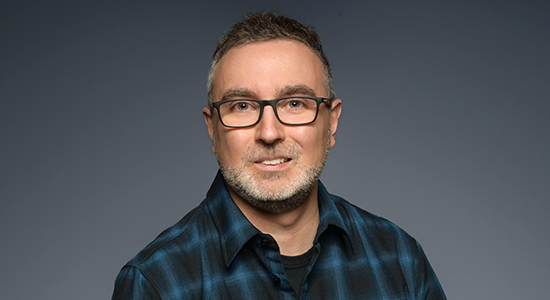
APPOINTMENT. New group leader joining the Finsen Lab and BRIC will investigate tumour evolution in response to therapeutic pressure.
De la Cruz group
We study how solid tumors respond, adapt and evolve during cancer treatment.
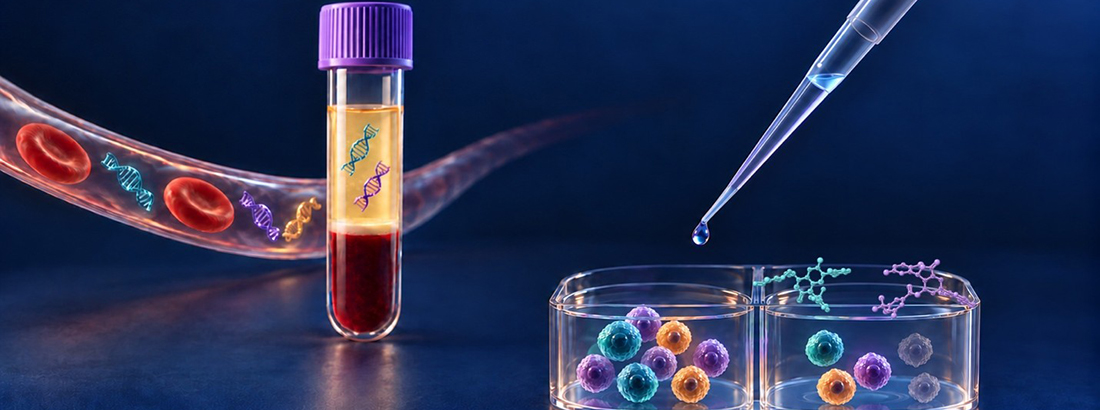
Our research connects molecular changes observed in patients with experimental studies that explain how cancer cells survive therapy.
By integrating liquid biopsies, functional genomics and cancer models, we aim to identify opportunities to intercept resistance and achieve more durable treatment responses.
Targeted therapies can suppress sensitive cancer populations while favoring cells that survive through genetic alterations or reversible changes in cell state. These processes can coexist, generating heterogeneous tumors with multiple routes to treatment resistance.
Our vision is to make tumor evolution an actionable component of precision oncology. We investigate how resistance develops over time, which mechanisms sustain surviving cancer cells, and whether adaptation creates vulnerabilities that can be exploited therapeutically. By linking longitudinal patient studies with functional experiments, we seek to establish a biological basis for choosing both the treatment and the timing of intervention.
Our overarching research questions are:
- Which genetic and non-genetic mechanisms enable cancer cells to persist during targeted treatment?
- How do early adaptive responses influence the subsequent evolution of acquired resistance?
- Can circulating tumor DNA reveal emerging resistance and provide biomarkers to inform treatment decisions?
- Which dependencies arise in adapting and resistant tumor populations, and how can they be targeted?
- How should therapies be combined or sequenced to limit tumor escape and prolong patient benefit?
Following tumor evolution during treatment
We use longitudinal liquid biopsies and molecular profiling to follow changes in tumor populations as patients receive targeted therapies. Analysis of circulating tumor DNA enables us to track resistance-associated alterations and investigate their relationship to treatment response and disease progression.
These studies provide clinically grounded hypotheses for laboratory investigation and support the identification of biomarkers that could inform subsequent treatment choices.
Resolving the mechanisms of tumor adaptation
We investigate how cancer cells maintain survival during treatment, from early reversible adaptation to established acquired resistance. A central focus is understanding how genetic alterations and changes in cellular signaling or state interact to shape these transitions.
By examining tumor responses over time, we aim to distinguish mechanisms that initiate persistence from those that sustain resistant disease.
Establishing resistance mechanisms and therapeutic dependencies
We use functional genomics and experimental and patient-derived cancer models to test candidate mechanisms emerging from clinical studies. These experiments establish whether an alteration causes resistance, how it changes cancer cell behavior, and whether it creates new dependencies.
This approach connects molecular observations with biological function and identifies vulnerabilities for therapeutic testing.
Designing strategies to intercept resistance
We develop and evaluate drug combinations and treatment sequences informed by the mechanisms active in adapting and resistant tumor populations.
Our goal is to determine which interventions can eliminate surviving cancer cells, when they should be introduced, and how their effects depend on tumor context. These studies provide a foundation for treatment strategies that delay or prevent progression.
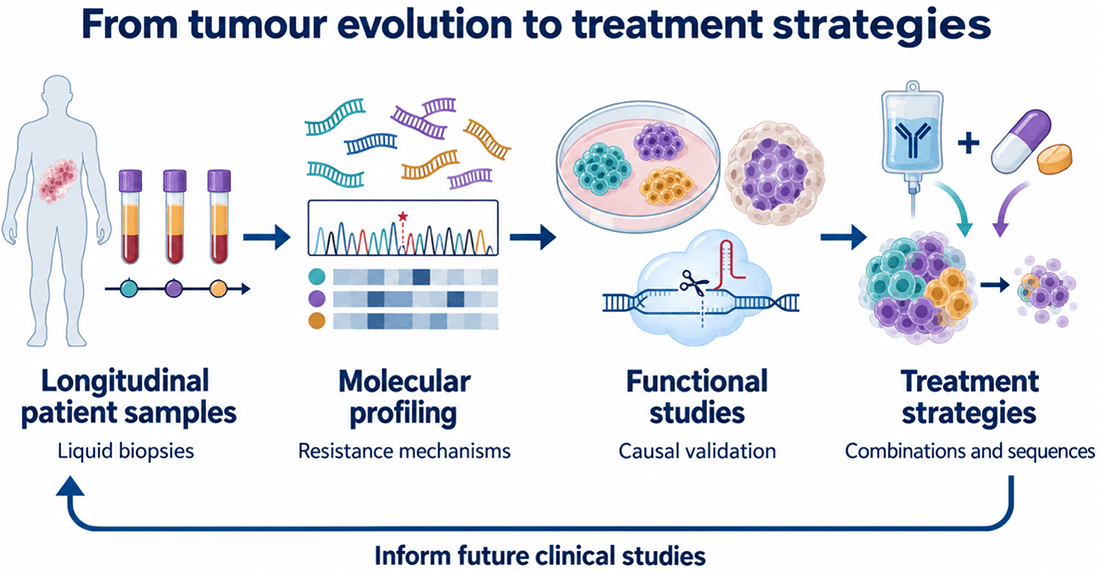
Our research combines longitudinal clinical sampling with molecular profiling and functional experimentation. We use circulating tumor DNA analysis, including sequencing and droplet digital PCR, to investigate resistance alterations and their dynamics during treatment.
Functional genomics, genetic engineering and molecular biology approaches allow us to test candidate mechanisms in defined experimental systems. Drug-response and clonogenic assays assess both immediate treatment sensitivity and the capacity of surviving cells to persist and regrow.
We integrate these approaches with experimental and patient-derived cancer models and molecular profiling to connect genetic changes, cellular adaptation and therapeutic response.
Our group works at the interface of the Finsen Laboratory, BRIC and clinical oncology at Rigshospitalet. Collaboration with clinicians, including the Phase I Unit, connects studies of patients receiving emerging cancer therapies with mechanistic research in the laboratory.
This exchange allows clinical observations to guide experimental questions and laboratory findings to inform the development of biomarkers and treatment strategies. Collaborations across complementary research disciplines and BRIC core facilities support the program’s molecular and functional studies.
Selected publications
Fece de la Cruz F*, Varkaris A*, et al. Acquired On-Target Alterations Drive Clinical Resistance to p53-Y220C Reactivators. Cancer Discovery, 2026.
Fece de la Cruz F, et al. Genetic dissection of DNA damage response pathways reveals divergent modulation of PD-1 blockade response in colorectal cancer. BioRxiv, 2026.
Riedl JM*, Fece de la Cruz F*, et al. Genomic landscape of clinically acquired resistance alterations in patients treated with KRASG12C inhibitors. Annals of Oncology, 2025.
Varkaris A*, Fece de la Cruz F*, et al. Allosteric PI3Kα Inhibition Overcomes On-target Resistance to Orthosteric Inhibitors Mediated by Secondary PIK3CA Mutations. Cancer Discovery, 2024.